If you are planning a trip to Romania and would rather travel with your own guide and vehicle than join a large group tour, one of the first questions is naturally:
How much does a private tour in Romania cost?
There is no single answer, because private tours are built around the travelers. The final price depends on the length of the trip, the number of people, the route, the type of accommodation and the experiences you want to include.
As a general indication, a private tour in Romania in 2026 can start from around €175 for a day tour, while a multi-day itinerary through Transylvania or several regions of Romania can cost from approximately €630 to €1,800 or more, depending on the length and structure of the trip.
Longer journeys combining Romania with neighboring countries such as Bulgaria, Serbia or Hungary will usually cost more because of the greater distances, additional nights and cross-border logistics.
In this guide, we explain what you are actually paying for when you book a private tour, what is normally included, and what factors have the biggest influence on the final price.
1. How much does a private tour in Romania cost?
When we prepare a tailor-made tour of Romania, the first things we need to know are quite simple:
- How many people are traveling?
- How many days do you have?
- When would you like to travel?
- Which parts of Romania would you like to see?
- What standard of accommodation do you prefer?
- Are there particular attractions or experiences you do not want to miss?
These details allow us to calculate a realistic tour price.
For example, these are some indicative starting prices for private trips based on a minimum of two travelers:
| Type of tour | Duration | Travelers | Indicative starting price |
|---|---|---|---|
| Private day tour | 1 day | 2 people | from €175 |
| Short Transylvania tour | 3–4 days | 2 people | from €630–€775 |
| Complete Romania tour | 7–10 days | 2 people | from €1,400–€1,800 |
| Romania and neighboring countries | 10–14 days | 2–6 people | from €1,800–€2,250 |
These figures should be treated as a starting point rather than a fixed price list.
A four-day tour covering Brașov, Bran, Sighișoara and Sibiu, for example, has a very different operating cost from a four-day itinerary trying to combine Transylvania with Bucovina or Maramureș.
The same applies to accommodation. A centrally located three-star guesthouse and a four- or five-star hotel can change the final quotation considerably.
This is why, for a custom private tour, we calculate the itinerary first and the exact price afterwards.
2. What is included in the price of a private tour?
One reason it can be difficult to compare private tour prices is that different companies include different services.
A cheap-looking quotation may cover only transportation and guiding, while another price may already include hotels, fuel, parking and other operating expenses.
For Romania Tour Store private tours, several important services are normally built into the tour price.
Private transportation
Transportation is one of the main components of the cost.
Depending on the itinerary, our transportation services include:
- use of the private vehicle;
- fuel for the itinerary;
- hotel pick-up and drop-off;
- transfers between hotels;
- parking fees;
- road taxes and vignettes;
- bridge or motorway charges where applicable;
- luggage insurance.
This is particularly important in Romania because many of the places travelers want to visit are spread across different regions.
Brașov, Sibiu and Sighișoara can be combined relatively easily, for example. Adding the painted monasteries of Bucovina, Maramureș or the Danube Delta means covering much greater distances.
A private vehicle allows the itinerary to be adapted to those distances without depending on train or bus schedules.
English-speaking driver-guide
To keep our private tours practical and reasonably priced, many Romania Tour Store itineraries use a driver-guide rather than a separate driver and tour guide.
Your driver-guide accompanies you throughout the trip, provides information about the regions you travel through, explains the history and culture of the places you visit, and leads walking tours in historical towns and at attractions where this is permitted.
At certain monuments and museums, local regulations determine how visits inside the attraction are organized. Some sites provide their own guided visits or have specific rules for external guides.
For this reason, the exact arrangements may differ from one attraction to another.
Accommodation
For tours lasting more than one day, accommodation can be included in the package.
We normally select hotels and guesthouses that make sense for the itinerary, with a preference for locations that allow travelers to explore historic centers easily in their free time.
One thing worth knowing about Romania is that accommodation in historic towns can be quite different from large modern hotels.
In cities such as Brașov, Sibiu and Sighișoara, many smaller hotels and guesthouses occupy restored historical buildings. They can have plenty of character and excellent locations, but some older buildings do not have elevators.
If stairs or luggage access are important considerations for you, mention this when requesting your tour. We can take it into account when choosing the accommodation.
Four- and five-star properties often offer larger rooms, elevators and more facilities, although their location relative to the historic center varies from city to city.
Breakfast is generally included in the accommodation selected for our multi-day tours. Double rooms are the usual arrangement for couples, while twin rooms can be requested subject to availability.
The accommodation of the driver-guide is part of the operating cost of the tour. The guide will not necessarily stay at the same hotel as the travelers.
Tour planning and reservations
A private tour involves considerably more than a vehicle and someone to drive it.
Behind every itinerary is the work of a travel specialist who has to coordinate the route, driving times, hotels, sightseeing and local services.
The tour price therefore also reflects services such as:
- designing the itinerary;
- selecting suitable hotels;
- making reservations;
- choosing the appropriate driver-guide;
- adjusting the route to your interests;
- coordinating local services;
- assisting you before departure;
- providing support during the tour.
This part is especially important for custom tours.
If you have seven days and want to see several parts of Romania, simply adding attractions to a list is not enough. The route has to work in real life, with realistic driving times and enough time left to actually enjoy the places you came to see.
3. What is usually not included?
Not every traveler wants to visit the same attractions, so we prefer to leave some flexibility in our itineraries.
Entrance fees to castles, museums and other attractions may therefore be paid separately, depending on the tour.
This means that if one traveler wants to visit a museum and another prefers to spend more time exploring a town, the itinerary can remain flexible.
Our guides or travel agents can help with reservations and ticket purchases when necessary.
For tailor-made and custom tours, entrance fees can also be included in the package if the travelers request this when the trip is being planned.
Meals
Lunches are generally not included in the basic tour cost.
During the day, the driver-guide can suggest restaurants depending on the route, available time and your food preferences.
In the evening, our multi-day itineraries normally leave travelers some free time. This is often one of the nicest moments to explore the historic center independently, find a local restaurant and try Romanian food at your own pace.
Depending on the specific itinerary, other expenses that may not be included are:
- castle and museum entrance tickets;
- lunches and dinners;
- drinks;
- international flights;
- travel insurance;
- gratuities;
- personal expenses;
- optional activities;
- single-room supplements.
The important point is that what is included varies from one itinerary to another.
Always check the detailed list of included and excluded services in your quotation rather than comparing tours only by their headline price.
4. What factors influence the cost of a private tour in Romania?
Several factors have a direct effect on the final cost.
Number of travelers
The number of people in the group is one of the most important.
Romania Tour Store can organize private tours starting from two participants.
When two people travel privately, they share the cost of the vehicle, fuel, driver-guide and other operational expenses between them.
With four or six travelers, many of those costs are shared among more people.
In other words, the total price of the tour does not simply double when the group grows from two to four travelers.
This is why the cost per person can decrease as the private group becomes larger.
Length of the tour
A one-day excursion has a very different cost structure from a ten-day journey.
For a day tour, the main expenses are usually the driver-guide, vehicle and transportation.
For a multi-day tour, the cost also includes accommodation for the travelers, accommodation for the driver-guide and additional operational expenses.
However, longer tours can also offer better value in terms of how much of Romania you can see without repeatedly returning to Bucharest.
A three- or four-day trip is often enough for a good introduction to Transylvania.
With seven to ten days, the route can go much further and may include regions such as Bucovina, Maramureș or other parts of the country.
Distance and route
Two tours of exactly the same length can have completely different prices.
The reason is distance.
Suppose you have only a limited amount of time but want to see Transylvania, the painted monasteries of Bucovina and Maramureș. The number of kilometers increases considerably, which means higher transportation costs and longer driving days.
One way we solve this problem is by designing open-jaw itineraries, where the tour starts in one city and finishes in another instead of returning to the original departure point.
For example, our Visit Transylvania from Budapest itinerary starts in Budapest, crosses into Romania, visits some of the main attractions of Transylvania and ends in Bucharest.
This allows travelers to see more without spending valuable vacation time backtracking.
The same principle works for multi-country tours.
Our Visit Bulgaria and Romania itinerary can start in Sofia, explore important places in Bulgaria, continue through Romania and finish in Bucharest.
Another example is our Bulgaria, Romania and Serbia tour. The route starts in Sofia, travels through Bulgaria, continues into Romania through Bucharest and Transylvania, heads west through Timișoara and finally enters Serbia, ending in Belgrade.
For travelers coming to Europe from a long distance, this type of route can make better use of both time and transportation costs.
5. Does the type of vehicle affect the tour price?
Yes.
The size of the group determines the vehicle we need to provide.
For two to three travelers, we normally use a spacious sedan such as a Škoda Superb or a similar vehicle.
For groups of four to seven travelers, we can provide a minivan such as a Mercedes Vito or similar.
For larger groups, particularly groups traveling with luggage, a larger minibus may be required. For groups approaching 15–16 travelers, for example, we may use a vehicle with up to approximately 20 seats and an appropriate professional driver-guide arrangement.
A larger vehicle costs more to operate, but because the cost is divided between more travelers, the price per person can still be attractive.
When requesting a quotation, tell us not only how many people are traveling but also whether you will have large suitcases. This helps us choose a vehicle that is genuinely comfortable for the journey.
6. Does the travel season affect the price?
Season can influence both cost and availability.
Based on our own bookings, some of the most popular periods for cultural and active tours are April, May, June, August, September and October.
If you plan to travel during one of these periods, we recommend arranging a private tour several months in advance when possible.
The main issue is not always the hotel price. Good English-speaking driver-guides can also become fully booked during busy periods.
Spring
Spring is a good time for cultural tours, although Easter and other holiday periods can bring heavier traffic on some routes.
The road between Bucharest and mountain destinations such as Sinaia, Bușteni, Bran and Brașov can become particularly busy around major holidays.
With a multi-day private itinerary, we can sometimes change the order of visits or adjust the route to avoid the busiest periods.
Summer
Summer is popular for mountain trips and scenic drives.
July can be hot in Bucharest and southern Romania, while temperatures in Transylvania and mountain areas are generally more comfortable.
Summer is also the main period for travelers who want to include high-altitude scenic roads in their itinerary.
Autumn
September and October are excellent months for cultural road trips, particularly in Transylvania.
The weather is usually suitable for sightseeing, the landscapes begin to change color and many outdoor activities are still possible.
Winter
Romania can also be visited during winter.
Romania Tour Store organizes winter itineraries that can include the Christmas markets of Bucharest, Brașov, Sibiu and Cluj-Napoca, as well as mountain destinations.
January and February generally bring the coldest winter conditions, while December can be a good option for travelers interested in Christmas markets and a winter atmosphere.
7. What about the Transfăgărășan Road?
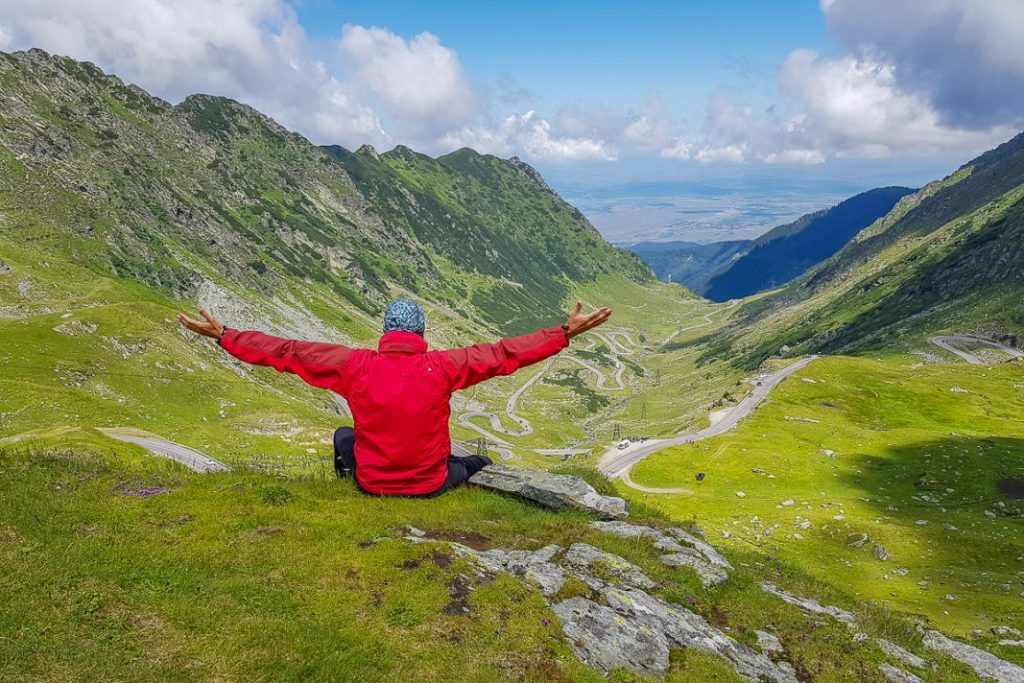
The Transfăgărășan is one of Romania’s most famous scenic roads, but it requires a little more planning.
Full road access across the Făgăraș Mountains is seasonal and depends on weather and official road conditions.
During the period when the high section of the road is closed to traffic, travelers approaching from Sibiu can still reach Bâlea Waterfall by road and, when the cable car is operating and conditions permit, continue by cable car to Bâlea Lake.
When the full road is open during the warmer months, it can be incorporated into a road-trip itinerary or visited on a dedicated Private Transfăgărășan and Bâlea Lake Day Trip.
Because opening and closing dates can vary from year to year, we recommend checking the road conditions when planning the trip rather than building an itinerary around a fixed opening date.
8. How much does a private day tour in Romania cost?
For travelers who want to understand how a private tour price is calculated, it can be useful to look at the individual operating costs.
For Romania Tour Store, an indicative calculation can include:
English-speaking driver-guide:
around €150 per day, per group
Transportation by car up to 3 travellers:
around €0.55 per kilometer, or $1 /mile including the use of the vehicle, fuel, road and bridge taxes, motorway charges where applicable, luggage insurance and parking.
Transportation by van up to 6 travellers: around €0.75 per kilometer, or $1.40/mile including the use of the vehicle, fuel, road and bridge taxes, motorway charges where applicable, luggage insurance and parking.
For a multi-day trip, there is also the driver-guide’s accommodation.
Driver-guide accommodation:
approximately €55–€65 per night for a single room.
The travelers’ accommodation is calculated separately according to the hotel category and location.
As a general indication:
Centrally located 3-star hotel:
a double room can start from approximately €80–€90 per night/including breakfast
4-star hotel:
a double room can be approximately €85–€120 per night/including breakfast depending on the city, property, season and availability.
Breakfast is normally included in the hotel rates used for our tour packages.
These numbers help explain why there is no universal “Romania private tour price per day.”
A 250-kilometer day and a 500-kilometer day do not have the same transportation cost. Likewise, a tour staying in small local guesthouses will not cost the same as one using four-star hotels throughout the itinerary.
9. Is a private tour worth the extra cost?
That depends on the way you like to travel.
A private tour is not simply a more expensive version of a group tour. It is a different way of traveling.
You have your own vehicle, your own guide and an itinerary designed around your available time.
There is no need to wait for a large group, follow a coach schedule or spend time at places that do not interest you.
If you particularly enjoy medieval history, we can spend more time in Transylvania.
If photography is important to you, the day can be organized around landscapes, villages and better light.
If you would rather spend less time inside museums and more time walking through towns and countryside, the itinerary can reflect that too.
That flexibility is one of the main things you are paying for.
10. How can you keep the cost of a private Romania tour reasonable?
A few decisions can make a noticeable difference.
Traveling with four or six people instead of two allows several fixed operating costs to be shared.
Choosing comfortable, centrally located three-star accommodation instead of luxury hotels can also reduce the price without necessarily reducing the quality of the experience.
The route matters as well.
Trying to see Bucharest, Transylvania, Bucovina, Maramureș and the Danube Delta in a very short trip creates long driving days and higher transportation costs.
Sometimes a slightly longer but better-designed itinerary is both more enjoyable and more efficient.
And if your travel dates are flexible, planning well in advance gives us more options for both guides and accommodation.
So, how much should you budget for a private tour in Romania in 2026?
For two travelers, a useful starting point is:
- Private day tour: from around €175
- 3–4 day Transylvania tour: from around €630–€775
- 7–10 day Romania tour: from around €1,400–€1,800
- 10–14 day Romania and neighboring countries tour: from around €1,800–€2,250
The exact amount will depend on your route, group size, accommodation and the services you want included.
The best way to get an accurate figure is therefore not to ask only, “How much does a private tour in Romania cost?”
Tell us how many people are traveling, your dates, how many days you have and what you would most like to see.
From there, we can build an itinerary and give you a realistic quotation based on the trip you actually want to take.
A private tour should not feel like choosing a standard package from a catalogue. The whole point is to create a journey that fits your time, interests and travel style.