Drive into northern Moldavia on a clear morning and you’ll eventually round a bend to find a small monastery church, its entire outer wall covered floor to eave in painted scenes — angels, prophets, a full Last Judgment stretching across the west façade, colors that have survived five centuries of rain and snow. This is Bucovina, and its painted monasteries are one of the last-visited, most genuinely astonishing sights in Romania.
Most international travelers never make it here. Bran Castle and Bucharest sit on the well-worn route; Bucovina requires a deliberate detour into the country’s northeast. That’s exactly why it rewards the trip — quiet monastery courtyards, resident nuns going about their day, and frescoes you won’t see reproduced anywhere else in the Orthodox world.
What makes the Bucovina painted monasteries unique
Painting the outside of a church, rather than just the interior, is almost unheard of elsewhere in Christian art. It started here in the late 15th and 16th centuries, under and after the reign of Stefan cel Mare (Stephen the Great), Moldavia’s ruling prince. The frescoes served a practical purpose as much as a devotional one: most parishioners couldn’t read, and the Ottoman Empire was a constant, looming threat. Bible stories, saints’ lives, and scenes like the Siege of Constantinople were painted where everyone could see them, turning the church walls into a public catechism and a statement of faith under pressure.
Eight of these churches are inscribed together on the UNESCO World Heritage List as the “Churches of Moldavia”: Voronet, Humor, Moldovita, Sucevita, Arbore, Patrauti, Probota, and St. John the New in Suceava. Seven were listed in 1993; Sucevita joined the list in 2010. Not all are equally easy to reach or equally dramatic to look at — most visitors focus on four or five of them, and that’s a perfectly complete way to experience Bucovina.
The monasteries worth prioritizing
Voronet Monastery:
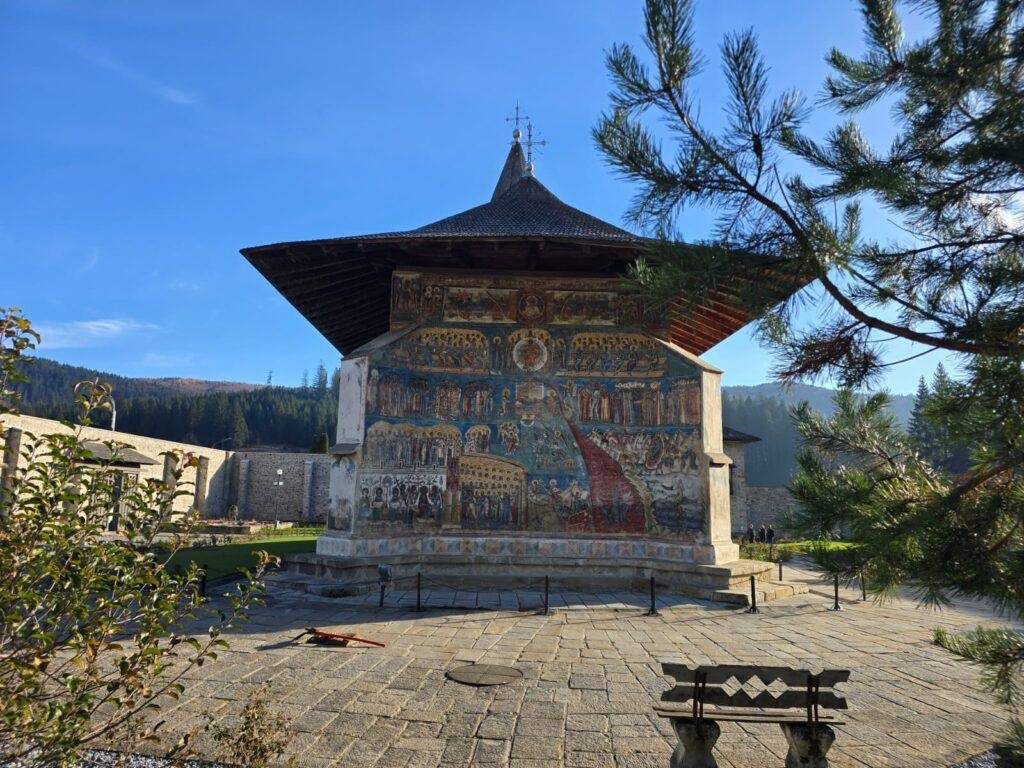
Voronet is the one photograph you’ve probably already seen. Built in 1488, it’s famous for “Voronet blue” — a pigment so intense and so durable that conservators still can’t fully explain its chemistry. The entire western wall is given over to a single, uninterrupted Last Judgment scene. Most people who see only one painted monastery see this one, and it’s usually the right call.
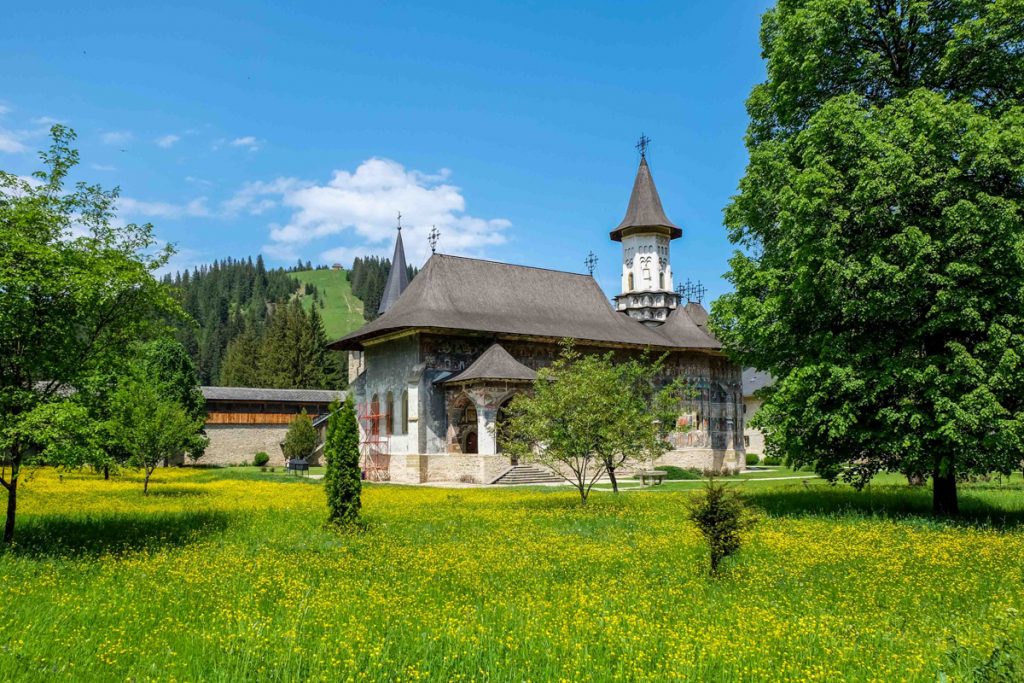
Sucevita is the counterpoint: less delicate, more fortress. Founded in 1581 and later expanded with thick defensive walls and towers, it’s the only one of the eight where frescoes cover all four exterior walls. The dominant tones lean green and red, and the standout scene is the Ladder of Virtue — rows of angels guiding souls upward while devils drag the unlucky ones off the rungs. It rewards slow looking.
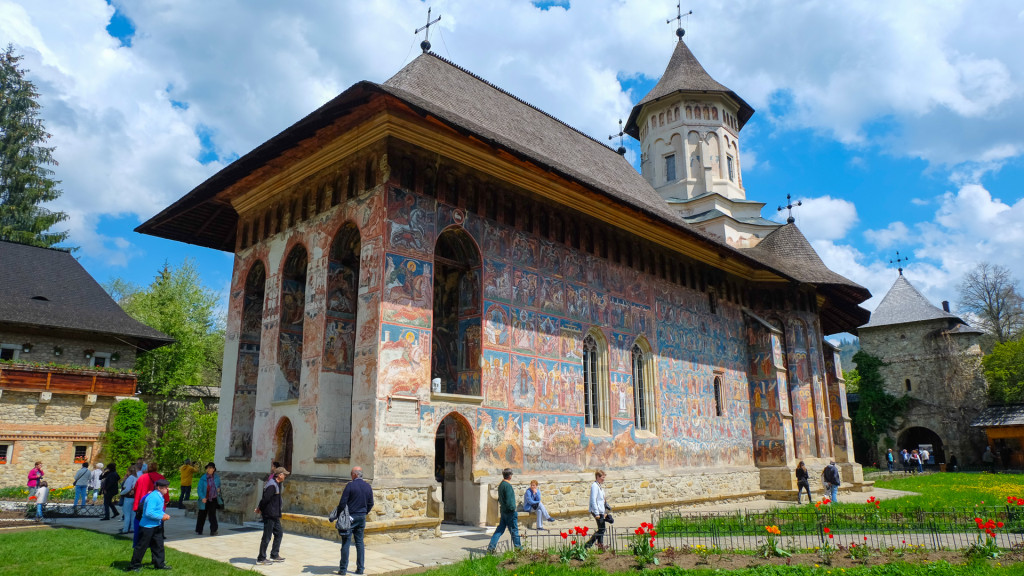
Moldovita has the most ambitious single narrative of the group: a sprawling Siege of Constantinople covering more than 200 square meters, painted in bright yellows and blues that still read clearly from a distance.
Humor, one of the earliest frescoed (1535, by the painter Toma of Suceava), is known for a warm reddish-brown palette and is considered, alongside Voronet, among the best-preserved of the eight.
If time allows a fifth stop, Arbore — smaller and less visited than the others — is worth the detour for travelers who want a quieter experience without a tour bus in the courtyard.
Getting to Bucovina
Bucovina sits in Romania’s far northeast, and it isn’t a casual day trip from Bucharest — the distance is roughly 450 km, about a 6-hour drive. Most independent travelers base themselves in or near Suceava, the historic former capital of Moldavia, or in the smaller, more scenic towns of Gura Humorului or Vama, both close to Voronet and Humor. Suceava has its own regional airport with limited connections; some travelers fly into Iasi instead and drive from there, while others build Bucovina into a longer loop that also covers Maramureș or Transylvania.
Painted Monasteries of Bucovina
How much time to plan
Two full days by car is enough to see the four or five main monasteries at a reasonable pace, starting from Suceava or Gura Humorului. Three days is more comfortable if you also want to stop in traditional guesthouses along the way, sample the region’s food, or add a visit to Putna Monastery — not on the UNESCO list, but historically significant as the burial place of Stefan cel Mare.
A typical day looks like this: an early start from your base, Voronet first (the frescoes photograph best in soft morning light), then Humor, a village lunch, and Moldovita or Sucevita in the afternoon before the light gets harsh. Trying to cram all eight UNESCO sites into one day isn’t recommended — you’ll spend more time driving than looking.
Practical notes for visiting
Most monasteries are open daily, generally from 9 a.m. to 5 p.m. in winter with longer hours in summer, though exact times shift by season and by monastery — it’s worth checking ahead for the specific ones on your route. Admission is a small fee per site, usually paid in Romanian lei, with an extra charge if you want to take photographs. Dress modestly, as these are active monasteries with resident nuns or monks — shoulders and knees covered is the standard expectation, and photography is not allowed inside during services.
These are working religious communities, not open-air museums, so mornings and early afternoons on weekdays tend to be quieter than weekend mid-days, when local pilgrims and tour groups overlap.
Where to stay
Gura Humorului and Vama are the most popular bases for independent travelers, with traditional guesthouses (pensiuni) offering home-cooked meals made from local produce. Suceava, the larger town, has more hotel options and better transport links if you’re arriving by train or plane. Travelers combining Bucovina with a Maramureș or Transylvania itinerary sometimes base themselves near Vatra Dornei instead, which sits conveniently between the two regions.
Why Bucovina belongs on your Romania itinerary
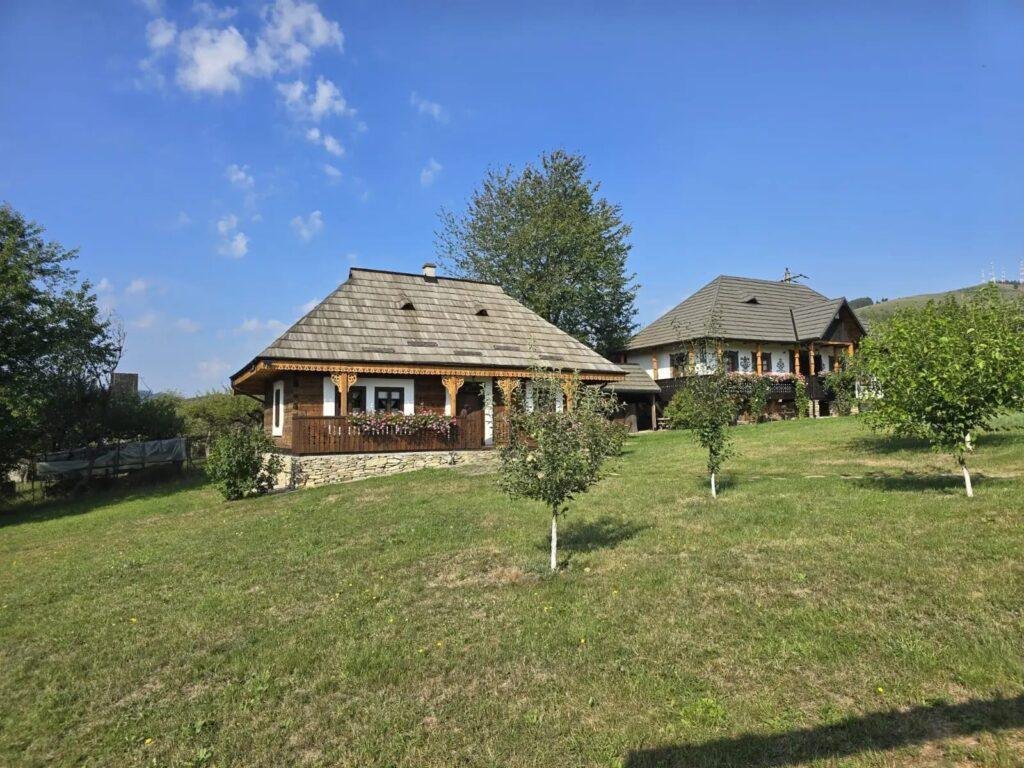
Transylvania gets the castles and the Dracula legend; Bucharest gets the capital-city energy. Bucovina offers something neither can — a region where medieval art, still-functioning monastic life, and genuinely rural landscapes haven’t been reshaped for mass tourism. It’s slower, and that’s the point.
If you’re planning a longer trip through Romania and want Bucovina built into a route that also takes in Maramureș’s wooden churches or Transylvania’s fortified towns, it’s the kind of detour worth arranging with a guide who knows which monasteries to prioritize on a tight schedule and how to sequence the drive. You can start that conversation on our custom tour page, where we build itineraries around exactly this kind of regional add-on.
FAQ:
- What are the Bucovina painted monasteries?
- How many of the Bucovina painted monasteries are UNESCO World Heritage Sites?
- Which is the most famous painted monastery in Bucovina?
- How do you get to the Bucovina painted monasteries from Bucharest?
- How many days do you need to visit the Bucovina painted monasteries?
- What should you wear when visiting the Bucovina monasteries?